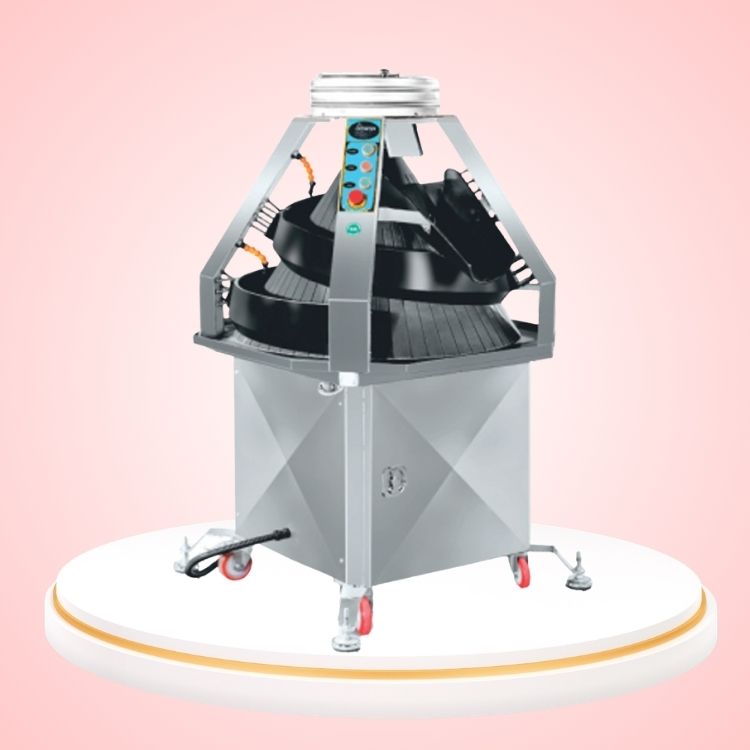
Conical Rounder
A Conical Rounder is an important bakery machine used to round divided dough portions into smooth, uniform dough balls. It uses a rotating conical surface and specially designed rounding channels to shape dough portions as they move through the machine. This process helps prepare dough for subsequent proofing, moulding and baking stages.
Monotech Baker's King Pvt. Ltd. offers bakery machinery solutions for commercial bakeries and food production businesses. A suitable Conical Rounder Machine can support dough processing operations by helping bakeries handle the rounding stage after dough dividing.
Whether you operate a bread manufacturing unit, bun production facility or commercial bakery, selecting the right Commercial Conical Rounder involves considering dough weight, dough characteristics, machine capacity and production requirements.
What Is a Conical Rounder?
A Conical Rounder is a dough processing machine designed to transform divided dough portions into rounded dough balls. It generally consists of a rotating cone and fixed or adjustable rounding tracks that guide the dough through a rolling and rounding movement.
As the dough portions move along the conical surface, the interaction between the rotating cone and rounding channels helps shape them into rounded portions. This prepares the dough for further processing, such as intermediate proofing, moulding or final shaping.
A Bakery Dough Rounder is commonly used after a dough divider in bread and bun production lines. The actual rounding performance depends on dough formulation, portion weight, machine adjustment and operating conditions.
Features to Consider in a Commercial Conical Rounder
When selecting an Industrial Conical Rounder, evaluate its rounding mechanism, dough compatibility and production specifications. Important factors to consider include:
- Conical Rounding Mechanism: Uses a conical surface and rounding channels to shape divided dough portions.
- Dough Weight Range: Check the minimum and maximum dough portion weights supported by the machine.
- Rounding Tracks: Evaluate the design and adjustment options of the rounding channels.
- Production Capacity: Check the specified dough processing output according to your production requirements.
- Machine Construction: Review the cone, frame and other machine components.
- Operating Speed: Understand the available speed and adjustment arrangements.
- Dough Compatibility: Check suitability for your dough formulation and consistency.
- Cleaning and Maintenance: Understand cleaning procedures and routine maintenance requirements.
Actual features, dough weight range, output capacity and technical specifications vary by model. Confirm the exact configuration before selecting a Conical Dough Rounder Machine.
Applications of a Conical Rounder
A Commercial Dough Rounder can support different dough processing applications in commercial bakeries. Depending on the machine specifications and dough requirements, common applications include:
- Bread Production: Rounding divided dough portions before further bread processing.
- Bun Manufacturing: Preparing rounded dough portions for burger buns, pav and other bun products.
- Roll Production: Rounding dough portions for suitable bread roll varieties.
- Bakery Production Lines: Supporting dough rounding between dividing and subsequent shaping stages.
- Commercial Dough Processing: Handling regular dough rounding requirements in bakery production units.
The suitability of the machine depends on the dough formulation, portion weight, required rounding quality and the next stage of production.
Benefits of Using a Conical Rounder Machine
A suitable Conical Rounder Machine can help commercial bakeries organise dough processing and prepare rounded dough portions for subsequent production stages.
Uniform Dough Rounding
The conical rounding mechanism helps shape divided dough portions into rounded forms.
Reduced Manual Rounding
Mechanical rounding can reduce the manual effort involved in suitable dough processing operations.
Improved Workflow
A dedicated Bakery Dough Rounder helps organise the transition from dough dividing to subsequent processing.
Commercial Production Support
A correctly selected Industrial Dough Rounder can support regular bread and bun production requirements.
Consistent Processing Method
Following suitable dough conditions and machine settings can help maintain a repeatable rounding process.
Production Line Integration
A conical rounder can be integrated into a suitable dough processing line between dividing and further shaping operations.
Conical Rounder vs Manual Dough Rounding
Manual dough rounding and machine-based rounding are two methods used in bakery production. Understanding their differences can help businesses decide whether a Commercial Conical Rounder is suitable for their production workflow.
| Comparison | Conical Rounder | Manual Dough Rounding |
|---|---|---|
| Rounding Method | Uses a rotating conical surface and rounding channels. | Dough portions are rounded manually by an operator. |
| Processing | Uses a machine-based rounding process. | Depends on the operator's handling technique. |
| Production Workflow | Can be integrated into a dough processing line. | Requires manual handling of individual dough portions. |
| Suitable Operations | Can suit bakeries with regular dough rounding requirements. | Can suit smaller-scale or lower-volume preparation. |
| Selection Criteria | Dough weight range, rounding performance and output. | Labour availability, production volume and handling requirements. |
The right method depends on your production volume, dough characteristics and workflow. A Commercial Dough Rounding Machine can be considered when a bakery requires a dedicated mechanical rounding process.
How to Choose the Right Conical Rounder
Selecting the right Conical Rounder for bakery applications requires understanding your dough characteristics, portion weights and production volume. Consider the following factors before purchasing:
- Dough Weight Range: Identify the portion weights required for your bread, bun or roll products.
- Dough Characteristics: Consider dough consistency, hydration and formulation.
- Rounding Requirements: Discuss the required rounding quality and suitability for your finished products.
- Production Capacity: Check the machine's specified output against your daily production needs.
- Adjustment Options: Understand the available settings for the rounding tracks and operating speed.
- Production Line Compatibility: Check whether the machine can be integrated with your existing dough divider and downstream equipment.
- Installation Space: Verify the machine dimensions and required operating clearance.
- Maintenance and Support: Check cleaning procedures, warranty coverage and spare parts availability.
Discuss your dough processing requirements with the supplier to identify a suitable Industrial Conical Rounder Machine.
Why Choose Monotech Baker's King for Bakery Machinery?
Monotech Baker's King Pvt. Ltd. provides bakery machinery solutions for commercial bakeries and food production businesses. Based in Mangur, Karnataka, the company caters to businesses looking for equipment to support different bakery production processes.
When enquiring about a Conical Rounder from Monotech, share your dough portion weights, dough characteristics and daily production volume. This helps you evaluate the available machine configuration for your bakery.
- Bakery machinery solutions for commercial applications.
- Equipment options for different bakery production requirements.
- Product guidance based on dough rounding needs and machine specifications.
- Manufacturing base in Mangur, Karnataka.
Conical Rounder in Maharashtra and Karnataka
Monotech Baker's King, based in Mangur, Karnataka, caters to bakery machinery enquiries from businesses across Maharashtra and Karnataka. Bakeries searching for a Conical Rounder in Maharashtra can enquire about available models for bread, bun and other suitable dough rounding applications.
We also cater to enquiries for a Conical Rounder in Karnataka, including from bakery businesses in Belagavi, Nipani, Bengaluru, Hubballi and Dharwad. Businesses in Kolhapur, Sangli, Pune, Mumbai and Satara can also enquire about suitable commercial dough rounding machines for their production requirements.
Contact our team to discuss available models, dough weight range, technical specifications, delivery arrangements and the right machine configuration for your business.
Got Questions?
Frequently Asked Questions
Common questions and answers regarding Conical Rounder.
A Conical Rounder is designed to round divided dough pieces into smooth, round dough balls as they travel upwards along spiral tracks on a rotating cone, sealing the dough structure before resting.
Dough pieces from the divider enter the base of the machine. The rotating cone combined with stationary spiral channels gently rolls and rotates the dough, creating a tight surface skin and uniform ball shape.
It reduces dough stickiness, creates a consistent gluten envelope that traps proofing gases, and delivers uniform dough pieces directly to the intermediate proofer or moulder.
Yes, conical rounders are equipped with non-stick Teflon-coated channels, mechanical flour dusters, and air blowing systems to prevent sticky dough from adhering to the cone.
Commercial conical rounders typically handle dough portions from 50 grams to 1200 grams, with capacities reaching up to 2,000 to 3,000 pieces per hour.
Wipe down the spiral channels daily, clean the excess flour collection drawer, ensure the flour duster is refilled with dry flour, and check cone belt tension periodically.
Contact Monotech Baker's King Pvt. Ltd. in Mangur, Karnataka, for high-capacity conical dough rounders for high-speed industrial and commercial bakeries.
Client Feedback
Customer Reviews & Feedback
What bakery professionals say about Conical Rounder.
“We’ve been using their bread-making equipment for over two years now. The durability and efficiency are unmatched. Highly recommended!”
“Low maintenance and high performance – that’s what defines their equipment. It has saved us both time and operating costs."