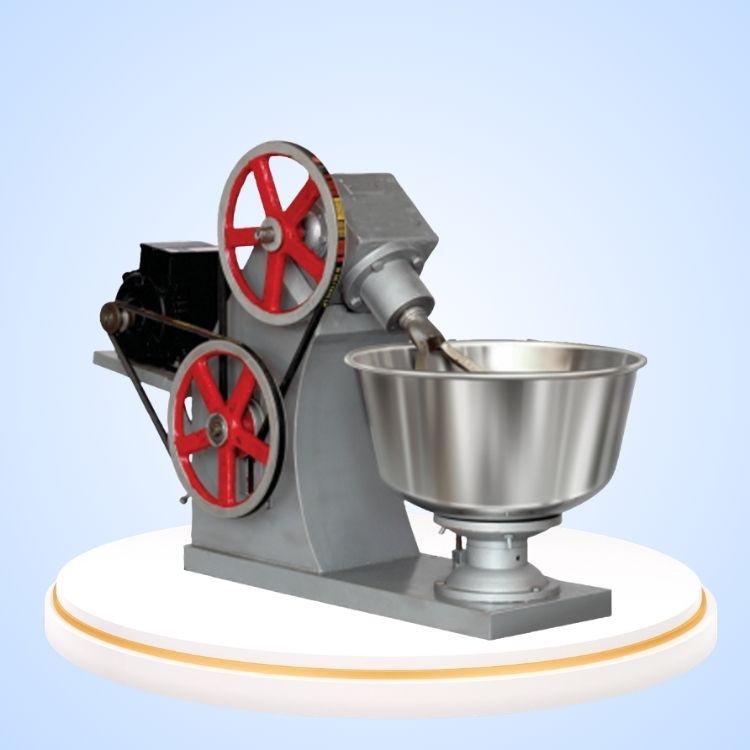
Dough Kneading Machine (Bangadi Mixer)
A Dough Kneading Machine is an important piece of equipment in commercial bakeries where large quantities of dough need to be prepared for regular production. It helps combine flour, water and other ingredients through a kneading process to develop dough suitable for different bakery applications.
Also known as a Bangadi Mixer in certain bakery and food production settings, this equipment is used by businesses looking for a dedicated solution for dough preparation. Monotech Baker's King Pvt. Ltd. offers bakery machinery solutions for commercial bakeries and food production units looking to streamline their dough mixing and kneading operations.
What Is a Dough Kneading Machine (Bangadi Mixer)?
A Dough Kneading Machine is bakery equipment designed to mix and knead dough ingredients until they form a workable dough. It helps combine ingredients more efficiently than manual kneading and supports repetitive dough preparation in commercial production environments.
A Bangadi Mixer is a commonly used regional term for certain dough mixing or kneading machines. The exact construction and working mechanism can vary between models, so it is important to select equipment according to the actual machine design and the type of dough being prepared.
A suitable Commercial Dough Kneading Machine can support the preparation of dough for bread, buns and other bakery products, depending on its capacity and mixing arrangement.
Features to Consider in a Commercial Dough Kneading Machine
When selecting an Industrial Dough Kneader, bakery owners should evaluate its construction, kneading arrangement and suitability for their production requirements.
- Kneading Mechanism: Understand the machine's mixing and kneading arrangement and whether it is suitable for your dough preparation process.
- Batch Capacity: Check the actual dough or flour handling capacity and select a machine according to your production volume.
- Motor and Power: Review motor specifications, electrical requirements and operating conditions.
- Machine Construction: Consider the build quality, materials and suitability for regular commercial bakery operations.
- Ease of Operation: Evaluate the feeding process, controls, loading and unloading arrangements.
- Cleaning and Maintenance: Check access to the mixing or kneading area and the cleaning requirements of product-contact components.
- Safety Arrangements: Review the machine's safety provisions and operating procedures before use.
Actual capacity, kneading mechanism, motor power, construction materials and available features should be confirmed for the selected model before purchase.
Applications of a Bangadi Mixer
A Bakery Dough Kneading Machine can be used in different food production environments where dough needs to be mixed and kneaded before shaping, proofing or baking.
- Bread Production: For preparing bread dough in commercial bakeries.
- Bun Manufacturing: For mixing and kneading suitable dough used in bun production.
- Commercial Bakeries: For regular dough preparation as part of daily bakery operations.
- Wholesale Bakeries: For businesses preparing dough in recurring batches for larger-scale production.
- Food Production Units: For suitable dough preparation applications that match the machine's design and capacity.
The machine's suitability for specific dough types depends on its kneading arrangement, batch capacity and operating characteristics.
Benefits of Using an Industrial Dough Kneader
Using a suitable Industrial Dough Kneading Machine can help commercial bakeries organise their ingredient mixing and dough preparation processes.
- Reduced Manual Kneading: Helps reduce repetitive manual effort involved in preparing dough.
- Efficient Ingredient Mixing: Provides a dedicated process for combining flour, water and other ingredients.
- Batch-Based Preparation: Supports organised dough preparation according to the machine's capacity.
- Consistent Processing: Helps maintain a repeatable kneading process when operated with suitable ingredients and settings.
- Improved Production Workflow: Helps streamline dough preparation before dividing, moulding or further processing.
- Commercial Bakery Support: Provides a dedicated solution for businesses with regular dough production requirements.
Dough Kneading Machine vs Manual Kneading
Businesses can prepare dough manually or use a dedicated Commercial Dough Mixer. The right approach depends on batch size, production frequency and the type of dough being prepared.
| Comparison | Dough Kneading Machine | Manual Kneading |
|---|---|---|
| Kneading Process | Uses a dedicated mechanical kneading arrangement | Performed manually by workers |
| Labour Requirement | Can reduce repetitive manual kneading effort | Requires direct physical effort |
| Batch Preparation | Designed for batch processing according to machine capacity | Depends on available labour and manual handling |
| Workflow | Can streamline regular dough preparation | May require more time for recurring batches |
| Equipment Investment | Requires investment in dedicated machinery | Does not require a powered kneading machine |
Bangadi Mixer vs Planetary Mixer
A Bangadi Mixer and a Planetary Mixer are both used in food preparation, but their suitability depends on the machine's design and the ingredients being processed.
| Comparison | Bangadi Mixer | Planetary Mixer |
|---|---|---|
| Primary Application | Typically associated with dough mixing or kneading applications | Used for mixing a range of bakery and food ingredients |
| Mixing Arrangement | Depends on the specific Bangadi Mixer design | Uses a planetary mixing action |
| Common Applications | Suitable dough preparation according to machine configuration | Cake batter, cream, icing and other suitable mixtures |
| Selection Factor | Dough type, kneading requirements and batch capacity | Ingredient type, mixing attachments and bowl capacity |
Always compare the actual machine designs and manufacturer specifications before deciding which mixer is suitable for your bakery.
How to Choose the Right Dough Kneading Machine
Before purchasing a Commercial Dough Kneading Machine, consider your production requirements, dough characteristics and available workspace.
- Identify Your Products: Determine the types of bread, buns or other bakery products you plan to manufacture.
- Calculate Batch Requirements: Select a machine according to the amount of dough or flour processed per batch.
- Check Dough Compatibility: Confirm that the machine can handle your dough consistency and formulation.
- Review Kneading Performance: Understand the machine's kneading action and its suitability for your production process.
- Evaluate Construction: Check the materials, build quality and cleaning access.
- Confirm Technical Specifications: Review motor power, electrical requirements, dimensions, operating method and maintenance needs.
Why Choose Monotech Baker's King for Dough Kneading Machines?
Monotech Baker's King Pvt. Ltd. provides bakery machinery solutions for commercial bakeries and food production businesses. Based in Mangur, Karnataka, the company caters to businesses exploring equipment for different stages of bakery production.
- Bakery Machinery Solutions: Equipment options for different commercial bakery production requirements.
- Product-Focused Guidance: Assistance in understanding machine suitability and available configurations.
- Production-Based Selection: Support in evaluating machinery according to your dough preparation requirements.
- Regional Enquiries: A convenient option for businesses exploring bakery machinery from Karnataka and Maharashtra.
Dough Kneading Machine Enquiries in Maharashtra and Karnataka
Monotech Baker's King welcomes enquiries from commercial bakeries and food production businesses looking for a Dough Kneading Machine in Maharashtra and Dough Kneading Machine in Karnataka.
Businesses in Kolhapur, Sangli, Pune, Satara and other parts of Maharashtra can enquire about suitable bakery machinery options. We also cater to enquiries from Nipani, Belagavi, Hubballi, Dharwad and other parts of Karnataka.
Contact Monotech Baker's King to discuss your dough kneading requirements and confirm the available machine models, configurations and technical specifications.
Got Questions?
Frequently Asked Questions
Common questions and answers regarding Dough Kneading Machine (Bangadi Mixer).
A Bangadi Mixer (also known as a traditional rotary ring dough kneader) is a heavy-duty commercial kneading machine used for mixing stiff doughs for bakery items, khari, puff pastry, farsan, and Indian breads.
It is named after its characteristic circular ring or bangle-shaped rotating mixing arm ('Bangadi') that folds and stretches tough dough with high mechanical torque.
The slow, high-torque kneading action kneads heavy flour batches with minimal water content without straining the motor, which is essential for khari, biscuits, and laminated doughs.
Bangadi kneaders are available in capacities ranging from 10 kg, 20 kg, to 50 kg or more dry flour capacity to suit local bakery and snack manufacturing requirements.
A Spiral Mixer is built for soft, hydrated bread doughs with fast gluten development. A Bangadi kneader is heavier and suited for stiff, low-moisture doughs required for traditional biscuits, khari, and savories.
Check the bowl and arm material (preferably stainless steel for food contact), motor horsepower, gearbox durability, and stability of the heavy-duty cast frame.
Monotech Baker's King Pvt. Ltd., headquartered in Mangur, Karnataka, manufactures and distributes heavy-duty Bangadi mixers across Maharashtra, Karnataka, and Goa.
Client Feedback
Customer Reviews & Feedback
What bakery professionals say about Dough Kneading Machine (Bangadi Mixer).
“The cookie dropping machine we purchased has transformed our production line. Consistent quality, faster output, and very low maintenance – exactly what we needed.”
“Excellent machines backed by excellent service. Their team guided us from installation to training, making the process seamless.”