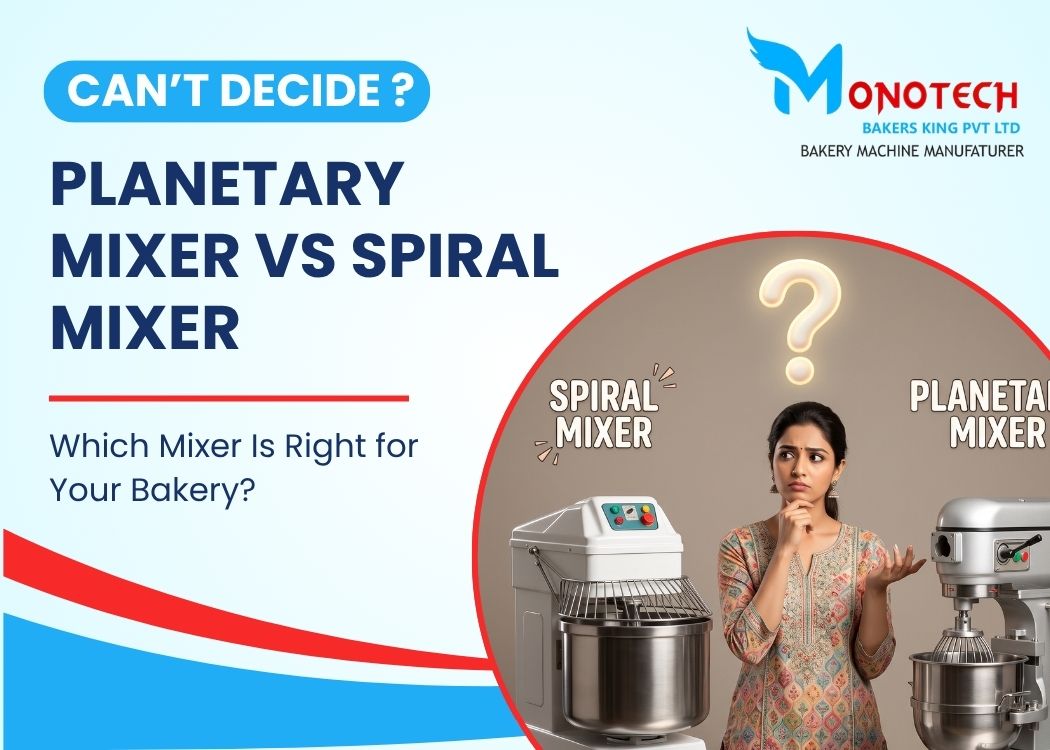
Planetary Mixer vs Spiral Mixer: Differences, Uses & Best Choice for Bakeries
Planetary Mixer vs Spiral Mixer: Which Mixer Is Right for Your Bakery?
Choosing the right mixing equipment is an important decision for any commercial bakery. Whether you prepare cakes, cookies, bread, pizza bases or other bakery products, the quality of your mixing process directly affects the consistency, texture and quality of the final product. Two commonly used machines in commercial bakeries are the planetary mixer and the spiral mixer.
Although both machines are designed for mixing ingredients, they work differently and are suitable for different applications. A planetary mixer is commonly used for cake batter, cream, icing and various bakery preparations, while a spiral mixer is specially designed for kneading bread, pizza and other dough-based products.
In this guide, we will explain the difference between a planetary mixer and a spiral mixer, their working principles, applications, advantages and the important factors to consider before purchasing a commercial bakery mixer.
1. What Is a Planetary Mixer?
A planetary mixer is a commercial mixing machine designed to mix different ingredients thoroughly and consistently. It gets its name from the movement of its mixing attachment, which rotates on its own axis while moving around the mixing bowl, similar to the movement of planets.
This dual mixing movement helps the attachment cover different areas of the bowl and combine ingredients effectively. Planetary mixers generally support different attachments, allowing bakeries to perform several mixing operations using a single machine.
Common Applications of a Planetary Mixer
- Cake Batter: Mixing cake ingredients to achieve a smooth and consistent batter.
- Cream and Whipping: Preparing whipped cream, frosting and other cream-based mixtures with a suitable attachment.
- Cookie Mixtures: Combining ingredients for different types of cookie and biscuit preparations, depending on the machine's capacity and specifications.
- Icing and Frosting: Preparing buttercream, icing and decorative cake mixtures.
- General Bakery Mixing: Mixing various ingredients used in commercial bakery production.
Advantages of a Planetary Mixer
- Suitable for multiple bakery mixing applications.
- Different attachments provide greater flexibility.
- Useful for preparing cake batter, cream and cookie mixtures.
- Helps maintain consistency across repeated batches.
- Available in different bowl capacities to suit different production requirements.
2. What Is a Spiral Mixer?
A spiral mixer is a specialised commercial bakery machine primarily designed for mixing and kneading dough. It uses a spiral-shaped mixing hook along with a rotating bowl to develop dough efficiently.
During operation, the spiral hook works the dough while the bowl rotates, helping combine flour, water, yeast, salt and other ingredients into a uniform mixture. This process is particularly useful for bakeries that regularly prepare bread, pizza bases and other yeast-based dough products.
Common Applications of a Spiral Mixer
- Bread Dough: Mixing and kneading dough for different bread varieties.
- Pizza Dough: Preparing smooth and elastic dough for pizza bases.
- Bun and Roll Dough: Mixing dough for buns, rolls and similar bakery products.
- Bakery Dough Preparation: Handling regular dough production in commercial bakeries.
- Yeast-Based Products: Preparing dough for products that require proper gluten development.
Advantages of a Spiral Mixer
- Designed specifically for dough mixing and kneading.
- Helps develop consistent dough texture.
- Suitable for regular bread and pizza production.
- Supports repetitive dough preparation in commercial bakeries.
- Available in different capacities for small and large production requirements.
3. Planetary Mixer vs Spiral Mixer: Key Differences
The main difference between these two machines is their mixing mechanism and intended application. While a planetary mixer offers versatility for different bakery mixtures, a spiral mixer is designed mainly for dough preparation.
| Comparison | Planetary Mixer | Spiral Mixer |
|---|---|---|
| Primary Purpose | General bakery mixing | Dough mixing and kneading |
| Working Mechanism | Attachment rotates on its axis and moves around the bowl | Spiral hook works the dough while the bowl rotates |
| Best For | Cake batter, cream, icing and cookie mixtures | Bread dough, pizza dough, buns and rolls |
| Mixing Attachments | Usually supports different attachments | Uses a specialised spiral mixing hook |
| Mixing Requirements | Different types of bakery mixtures | Primarily dough preparation |
| Production Focus | Versatile bakery preparation | Regular dough production |
| Ideal Users | Cake shops, pastry shops and multi-product bakeries | Bread manufacturers, pizza outlets and dough-focused bakeries |
4. Which Mixer Is Better for Cake and Cookie Production?
If your bakery mainly produces cakes, pastries, cream-based products and cookie mixtures, a planetary mixer is generally the more suitable option.
Its mixing attachments allow you to perform different operations according to the recipe and mixture consistency. A suitable flat beater, whisk or dough hook can be selected depending on the application and the manufacturer's recommendations.
For bakeries that manufacture multiple products, a planetary mixer can offer flexibility by supporting different mixing requirements without needing a separate machine for every preparation.
5. Which Mixer Is Better for Bread and Pizza Dough?
If your primary production involves bread, pizza bases, buns and other dough-based products, a spiral mixer is generally the better choice.
Its spiral mixing mechanism is designed to knead dough and develop the structure required for many yeast-based bakery products. The combination of the spiral hook and rotating bowl helps produce uniform dough for repeated production batches.
For commercial bread manufacturers and bakeries with regular dough requirements, selecting the correct spiral mixer capacity can help improve production consistency and workflow.
6. Factors to Consider Before Buying a Commercial Bakery Mixer
Before investing in a bakery mixer machine, consider your production requirements, product range and available workspace. The right equipment should support your current operations while accommodating future business growth.
1. Type of Bakery Products
Identify the products you manufacture most frequently. Choose a planetary mixer for versatile mixing applications or a spiral mixer for regular dough preparation.
2. Production Capacity
Consider the quantity of ingredients you need to mix per batch. Select a machine with an appropriate bowl capacity and rated working capacity rather than choosing only by its advertised size.
3. Motor and Performance
Check the motor specifications, operating speeds, duty cycle and suitability for your intended ingredients. These details help you understand whether the machine can handle your production requirements.
4. Machine Construction and Durability
Look for a sturdy construction, quality components and a design suitable for regular commercial use. Food-contact surfaces should be appropriate for food processing and easy to clean.
5. Ease of Operation and Cleaning
Choose equipment that operators can use safely and clean efficiently. Check the accessibility of the bowl, attachments, controls and removable components.
6. Maintenance and After-Sales Support
Consider the availability of spare parts, maintenance assistance, operator training and technical support. Reliable support can help reduce production interruptions over time.
7. Budget and Long-Term Value
Compare machines based on capacity, specifications, construction, features and service support. The lowest purchase price may not always provide the best long-term value for your bakery.
7. Can a Bakery Use Both Planetary and Spiral Mixers?
Yes. Bakeries that manufacture a wide range of products may benefit from having both a planetary mixer and a spiral mixer.
For example, a commercial bakery producing cakes, cookies, bread and pizza can use a planetary mixer for cake batter, cream and suitable cookie mixtures, while a spiral mixer can handle bread and pizza dough preparation.
Using equipment designed for each specific application helps organise production activities and allows the bakery to select the appropriate mixing process for each product.
8. Planetary Mixer vs Spiral Mixer: Which One Should You Choose?
The right choice depends on the products you manufacture and the type of mixing your bakery performs most frequently.
- Choose a Planetary Mixer if you mainly prepare cake batter, cream, icing, frosting and different bakery mixtures.
- Choose a Spiral Mixer if you regularly prepare bread dough, pizza dough, buns and other yeast-based products.
- Choose Both Machines if your bakery has a diverse product range and requires dedicated equipment for both general mixing and dough kneading.
Always compare the machine's technical specifications, recommended batch capacity and application suitability before making a purchase.
9. Choose the Right Bakery Mixing Equipment with Monotech Baker's King
Selecting the right machinery is an important step towards building an efficient bakery production setup. At Monotech Baker's King Pvt. Ltd., we focus on bakery machinery designed to support the needs of commercial bakeries and food production businesses.
Our range of bakery machinery includes equipment such as planetary mixers, spiral mixers, cookie drop machines, wire-cut cookie machines, cake depositors, bread slicers and cream-filling machines.
We understand that every bakery has different production requirements. Our focus is on providing suitable machinery, continuous product improvements, operator training and customer support to help businesses establish and improve their bakery operations.
Whether you are setting up a new bakery or upgrading your existing production facility, selecting the right equipment can make a meaningful difference to your workflow and product consistency.
Frequently Asked Questions (FAQs)
Conclusion
Both planetary mixers and spiral mixers play important roles in commercial bakery production, but they serve different purposes. A planetary mixer offers flexibility for cake batter, cream, icing and other bakery mixtures, while a spiral mixer is designed for efficient dough preparation.
Understanding your product range, production volume and mixing requirements will help you choose the right machine for your business. With the right bakery equipment, you can build a more organised production process and maintain consistency across batches.
Explore the bakery machinery range from Monotech Baker's King Pvt. Ltd. and choose equipment that supports your production requirements.